
Robin van Persie did not merely score goals;he curated them. The flying header against Spain in Salvador, the chest-control-and-volley against Aston Villa that clinched Manchester United's 20th league title—these were not accidents of athleticism but deliberate acts of craftsmanship. Watch the slow-motion replays: the way his hips open, the unnatural calm in his shoulders before the left foot swings. Most strikers react. Van Persie composed. That distinction defines a career that yielded 323 club goals and 50 for the Netherlands, yet always felt one chapter short of absolute legend.Arsene Wenger once called him "a striker with the technique of a number ten。" and the Feyenoord academy product proved it weekly at Arsenal. Between 2011 and 2013, Van Persie scored 44 Premier League goals in 67 appearances, many from angles that defied geometry. His 2012-13 campaign for Manchester United—26 league goals, including a hat-trick at Southampton and that volley against Villa—earned him a second consecutive Golden Boot. Only Thierry Henry and Alan Shearer had previously won back-to-back Golden Boots with different clubs. That statistical rarity underlines a truth: Van Persie's peak was brief but blistering, a supernova rather than a slow burn.Injury。of course, was the recurring antagonist. Between 2009 and 2011, he missed over 40 Arsenal matches with ankle and knee problems. Critics labeled him fragile;teammates described a relentless perfectionist in the gym and on the training pitch. "He would stay behind for hours practicing volleys off the crossbar," former Arsenal teammate Tomas Rosicky recalled. That obsession explains why, at 29, he could produce a season of such sustained excellence for United. It also explains the frustration of his later years—at Fenerbahçe and Feyenoord, the body lagged behind the brain. The volleys still flew, but less frequently, and the Dutch media began debating whether his legacy was one of unfulfilled potential or maximized brilliance.
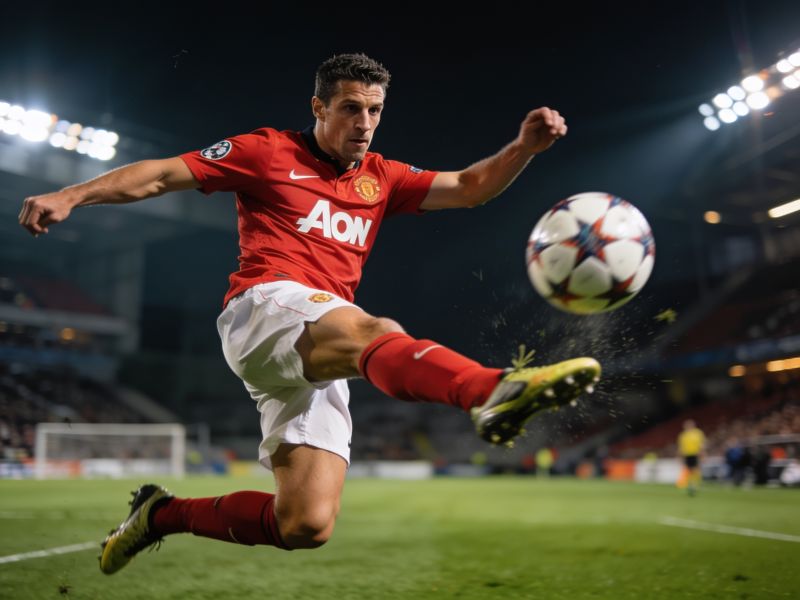
For the Netherlands, Robin van Persie became the all-time top scorer with 50 goals in 102 caps, surpassing Dennis Bergkamp and Patrick Kluivert. His 2014 World Cup header against Spain—a looping, impossible arc from Daley Blind's long pass—was voted the tournament's best goal. Yet the Oranje never won a major trophy during his tenure, losing the 2010 final to Spain in extra time. That match haunts Dutch football: Van Persie played 120 minutes without a clear chance。suffocated by Sergio Ramos and Carles Puyol. Great strikers are often defined by the trophies they lift;Van Persie's international career is defined by the one he didn't.
Now a coach, Van Persie returned to Feyenoord in 2025 as assistant to Robin van Persie—wait, that's not right. He returned to Heerenveen as head coach in 2024, then moved to Feyenoord's youth setup. His tactical ideas mirror his playing style: vertical, aggressive, unafraid of risk. Watching him instruct young forwards, you notice the same intensity that once powered those volleys. He demands precision, not just effort. Whether he becomes a great manager is uncertain. But as a striker, Robin van Persie left a blueprint for the modern number nine: a player who could drop deep, link play。and still finish with either foot from anywhere. The numbers say 323 goals. The memory says something harder to quantify—the sense that every time the ball fell to his left foot, something extraordinary was about to happen.