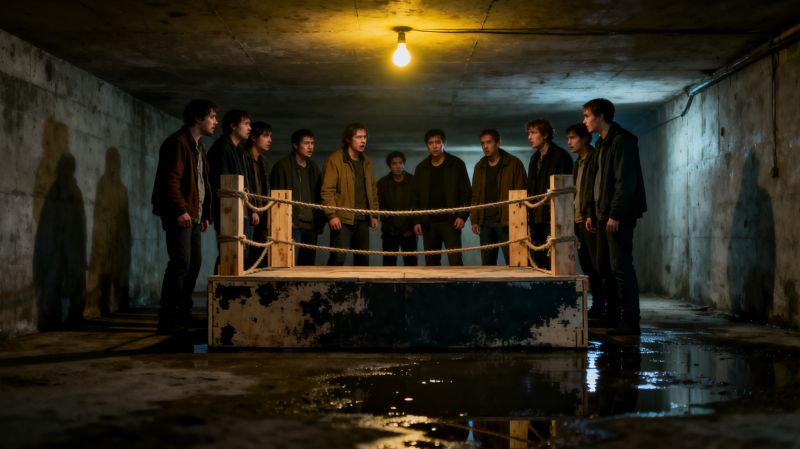
he concrete floor still holds the smell of sweat and cheap liniment from last night. A single fluorescent tube flickers over a hand-painted sign: Dabbur Arena. No cameras. No sponsors. Just a ring of folding chairs and a crowd that knows the difference between a lucky punch and a broken will. I first heard about this place from a taxi driver in East Jerusalem who described it as "where boys become ghosts." He wasn't exaggerating.What makes Dabbur Arena different isn't the violence—it's the silence between rounds. Fighters don't get walkout music or corner teams with buckets of ice. They get thirty seconds to breathe while a bookie collects cash in a plastic bag. The rules are simple: no eye gouging, no weapons, and you tap out or you don't get up. I watched a welder named Rashid fight three times in one night. He lost the second bout on a split decision, came back for the third with a swollen eye that looked like a bruised plum. He won by Submission. The crowd didn't cheer. They nodded. That's respect in Dabbur Arena.Locals say the arena has operated in the same basement for eleven years. No website. No social media. You find out about fights through word of mouth or a cracked SIM card passed between friends. The entry fee is 20 shekels for spectators, but fighters pay nothing—they earn a cut of the betting pool. A former fighter turned referee。who calls himself Abu Yazan, told me most men who step in here have day jobs: butchers, mechanics, unemployed teachers. "They don't come to be famous," he said in Arabic. "They come to feel something real." That's the uncomfortable truth about Dabbur Arena. It fills a gap that gyms and dojos can't.Critics call it barbaric. Human rights groups have tried to shut it down twice. But every raid fails because the community protects it. I asked a police officer off the record why they don't bust the place. He laughed. "You think we don't know?Half the force bets on Friday nights." That contradiction sits at the heart of Dabbur Arena—it's illegal, dangerous。and deeply woven into the neighborhood's social fabric. Fighters don't sign waivers. They shake hands. When someone gets seriously hurt, the crowd goes quiet, and someone's cousin drives them to the clinic. No lawsuits. No news coverage.Would I step in the ring?No. But I understand why others do. In a region where opportunities are scarce and dignity is often negotiable。Dabbur Arena offers a brutal kind of clarity. You win or you lose. You stand or you fall. Nothing else matters. The place isn't pretty, and it isn't safe. But it's honest in a way that few institutions are. For the men who fight there, that honesty is worth more than a title belt. It's worth the scars.